

Executive Summary
How does the workplace affect employee wellness?
Your workplace directly shapes employee wellness—physically, mentally, and emotionally. The environment you create influences stress levels, energy, productivity, and even long-term health outcomes. Organizations that intentionally design supportive, flexible, and engaging workplaces don’t just improve well-being, they unlock higher performance, stronger retention, and measurable ROI.
Why Does Your Workplace Matter More Than You Think?
Employees don’t experience wellness in isolation. They experience it inside your systems, your expectations, and your culture, every single day. A workplace can either fuel energy, focus, and purpose, or quietly drain them through stress, friction, and overload.
And here’s the key insight:
Most wellness outcomes are not driven by individual choices alone; they’re shaped by the environment in which those choices occur.
How Do Physical Environments Influence Workplace Wellness Impacts?

Your workspace either supports healthy behavior or it quietly works against it in ways that compound over time. Think about the signals your environment sends all day long: lighting that strains the eyes, chairs that encourage poor posture, layouts that discourage movement, or air quality that subtly impacts focus and fatigue. None of these feel dramatic in isolation, but together they shape how people feel, think, and perform hour by hour.
Research backs this up. A well-known study from the Harvard T.H. Chan School of Public Health found that employees working in optimized indoor environments—with improved ventilation and lower levels of indoor pollutants demonstrated significantly higher cognitive function scores, including better focus, crisis response, and information usage. In other words, the physical workspace doesn’t just influence comfort—it directly affects decision-making and productivity.
When you zoom out, the takeaway is clear: employees don’t rise above their environment consistently; they respond to it. The more your workspace removes friction and reinforces healthy behaviors, the less effort employees need to expend just to feel and perform at their best.
High-impact factors:
- Lighting (natural vs. artificial)
- Ergonomics (chairs, desks, posture support)
- Movement opportunities (stairs, walking paths, standing desks)
- Air quality and temperature
What this means in practice:
If an employee sits for 8 hours in poor lighting with no movement prompts, no amount of “wellness tips” will override that reality.
The environment always wins.
Related: Learn more about the 6 Pillars of Wellness
How Does Workplace Culture Shape Workplace Wellness Impacts?
Culture is what employees feel, even when nothing is being said, and that feeling shapes how they show up every single day. It lives in the pauses between meetings, in the tone of a manager’s feedback, in the unspoken rules about working late, and in whether it feels safe to admit you’re overwhelmed. Employees are constantly reading these signals and adjusting their behavior accordingly. If the environment rewards overwork, silence, or perfectionism, people will mirror that even if your official messaging promotes balance and well-being.
This isn’t just perception; it’s measurable. Research from Gallup consistently shows that workplace culture, particularly as experienced through managers, is one of the strongest predictors of employee engagement and burnout risk. In fact, their studies indicate that managers account for up to 70% of the variance in team engagement, which directly impacts stress levels, retention, and overall well-being.
The implication for leaders is hard to ignore: culture isn’t what’s written in your values statement, it’s what’s reinforced in everyday behavior. When employees feel psychologically safe, supported, and recognized, energy and performance tend to rise. When they feel pressure, ambiguity, or disconnection, the opposite often happens quietly at first, then all at once.
Signs of a wellness-supportive culture:
- Leaders model healthy behaviors (taking breaks, using PTO)
- Mental health is normalized, not stigmatized
- Workload expectations are realistic and sustainable
- Recognition and appreciation are consistent
Contrast that with:
- “Always on” expectations
- Burnout is being worn like a badge of honor
- Silence around stress and mental health
You can’t out-program a toxic culture.
Related: How Fransen Pittman Cultivates Employee Wellness and Culture with WellSteps
How Does Job Design Affect Workplace Wellness Impacts and Employee Stress?

Even the best wellness program struggles if the job itself is misaligned, because employees don’t experience wellness in a vacuum; they experience it through the demands, structure, and expectations of their role. If workloads are consistently unrealistic, priorities are unclear, or employees lack autonomy, no amount of step challenges, coaching sessions, or incentives will offset the underlying strain. Over time, that misalignment creates chronic friction. The kind that doesn’t show up as a single bad day, but as ongoing pressure that erodes energy, focus, and motivation.
This dynamic is well documented. Research from Deloitte suggests burnout is driven less by individual resilience gaps and more by organizational design factors such as workload, leadership behaviors, job design, and how work is structured. That means wellness programs are more effective when they address root causes, not just symptoms.
For leaders, the takeaway is both simple and strategic: if you want wellness programs to work, the job has to work first. When roles are designed with clarity, flexibility, and purpose, employees aren’t fighting against their workday; they’re supported by it. That’s when wellness efforts stop feeling like an extra layer and start becoming part of how people naturally operate.
Wellness-positive job design includes:
- Clear expectations and priorities
- Reasonable workloads
- Autonomy and flexibility
- Opportunities for growth and purpose
Chronic stress doesn’t come from one bad day, it comes from repeated friction with how work is structured.
Related: 24 Ways Employers Can Manage Stress at Work
How Does the Social Environment Impact Workplace Wellness and Employee Resilience?

Humans are wired for connection, and the workplace is one of the most consistent, high-impact environments where that connection either strengthens or erodes. For many employees, a significant portion of their social interaction happens during the workday, which means the quality of those interactions directly influences how they feel, think, and perform. Supportive relationships with colleagues can act as a buffer against stress, increase resilience during high-pressure periods, and create a sense of belonging that fuels engagement. On the other hand, isolation, lack of trust, or poor team dynamics can quietly drain motivation and accelerate burnout.
This isn’t just intuitive; it’s strongly supported by research. This isn’t just intuitive; it’s strongly supported by research. A widely cited meta-analysis from Harvard T.H. Chan School of Public Health found that strong social relationships are associated with a 50% increased likelihood of survival over time, underscoring just how foundational connection is to overall health. In workplace-specific contexts, studies from institutions like MIT’s Human Dynamics Lab have also shown that the quality of social interactions at work can be a stronger predictor of productivity than individual intelligence or skill alone.
The takeaway for organizations is clear: connection isn’t a “nice to have”, it’s a performance and wellness driver. When employees feel seen, supported, and part of a team, they’re more likely to stay engaged, collaborate effectively, and navigate challenges with greater resilience. When that connection is missing, even high performers can begin to disengage.
Strong social wellness looks like:
- Supportive teams
- Psychological safety
- Opportunities for collaboration
- Peer recognition
Employees who feel connected are:
- More engaged
- Less likely to burn out
- More resilient under pressure
Isolation at work is one of the fastest paths to disengagement.
How Does Leadership Behavior Influence Workplace Wellness Impacts?
Leaders don’t just influence wellness—they scale it. A single manager sets the tone for how work feels on a daily basis, and that tone ripples across every interaction, deadline, and expectation their team experiences. When a manager communicates clearly, sets realistic priorities, and demonstrates empathy, they create an environment where stress is manageable and performance is sustainable. But when expectations are inconsistent, communication is unclear, or urgency becomes the default, that same role can amplify pressure across the entire team—often without realizing it.
What makes this especially important is proximity. Employees don’t interact with “the organization” in an abstract sense—they experience their manager’s leadership style in real time, every day. That makes the manager the most immediate—and most powerful—lever for shaping wellness outcomes.
The implication is clear: leadership behavior doesn’t just impact one person at a time—it multiplies across teams. When managers are equipped to lead with clarity, consistency, and support, they don’t just improve performance—they create an environment where wellness can actually take hold.
High-impact leadership behaviors:
- Clear communication
- Consistent expectations
- Empathy and flexibility
- Active support of wellness initiatives
Reality check: Employees don’t experience “the company.” They experience their manager.
Related: Learn more about the impact of leadership support for wellness
How Do Workplace Policies and Flexibility Affect Workplace Wellness Impacts?
You can say you care about wellness, but policies prove it—because policies are where intention turns into everyday reality. They define what employees are actually allowed to do, not just what they’re encouraged to do. It’s one thing to talk about work-life balance; it’s another to have clear, supported policies that make it acceptable to log off on time, take PTO without guilt, or adjust schedules when life demands flexibility. Employees pay close attention to this gap. If policies don’t align with messaging, trust erodes—and wellness efforts start to feel performative rather than practical.
In many organizations, the difference between burnout and sustainability isn’t motivation, it’s permission. Permission to step away, to prioritize health, to participate in wellness initiatives during the workday without falling behind. Without that structural support, even the most well-designed programs become “extra”—something employees have to squeeze in after hours, which defeats the purpose entirely.
This connection between policy and well-being is well documented.
SHRM has reported that flexible work arrangements, leave, and supportive benefits can reduce stress, improve work-life balance, and support retention by helping employees recover and manage competing demands. SHRM also notes that encouraging people to use time off, setting fair workloads, and offering flexible schedules can help prevent burnout rather than just treat it after the fact.
The takeaway is simple but powerful: culture may shape perception, but policies shape behavior. And when those two align, wellness stops being aspirational—and starts becoming operational. You can say you care about wellness, but policies prove it.
Examples of supportive policies:
- Flexible schedules or hybrid work options
- Encouragement (and permission) to use PTO
- Wellness incentives tied to healthy behaviors
- Time built into the workday for participation
Without intent and flexibility, wellness becomes “one more thing to do”… instead of something the workplace enables.
Related: How to Start Health Contingent Wellness Programs
What Drives Workplace Wellness Impacts Across Your Organization?
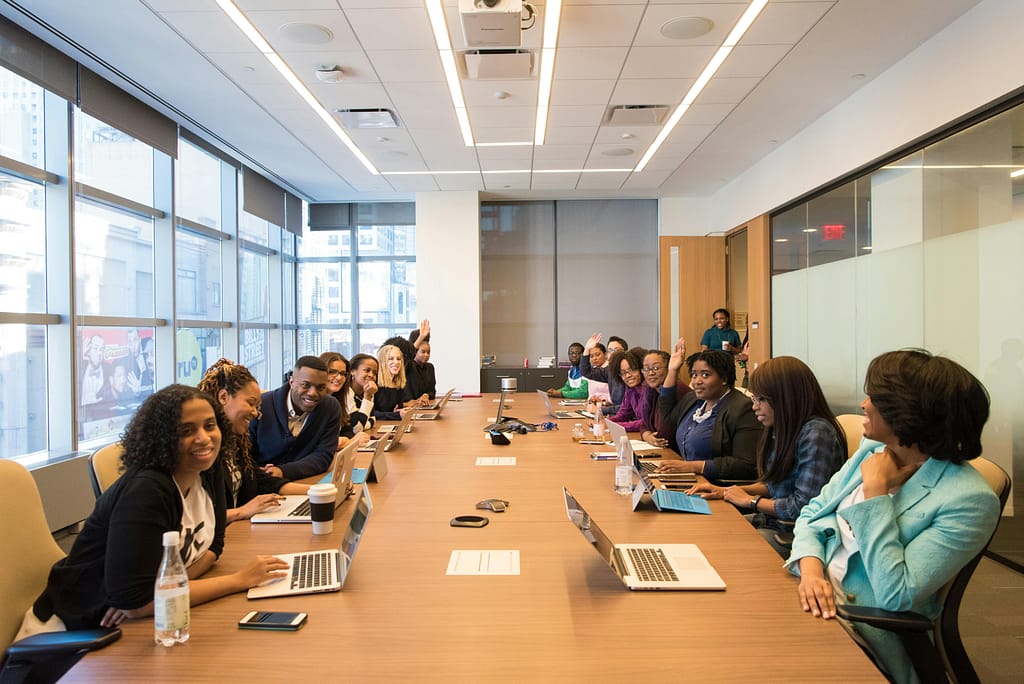
Here’s the big picture: Your wellness program is important, but it’s only one piece of the system. True employee wellness happens at the intersection of:
- Environment
- Culture
- Leadership
- Job design
- Support systems
When those align, something powerful happens. Employees don’t have to try to be well… the workplace makes it easier to be well. If you want better outcomes, lower healthcare costs, higher engagement, and stronger retention….
Don’t just ask: “How do we improve our wellness program?” Ask: “How does our workplace shape wellness every day?”
Because the companies that win aren’t the ones with the most programs. They’re the ones where wellness is built into how work actually happens.
At WellSteps, we don’t just deliver programs; we help organizations design environments where wellness actually works. From behavior change campaigns to expert-guided implementation, every piece is built to align with how your workplace operates day-to-day. If you’re ready to move beyond ideas and into measurable impact, schedule a demo and explore how your workplace can start driving better outcomes, naturally, consistently, and at scale.
Frequently Asked Questions
The most important workplace wellness impacts include employee stress levels, energy, engagement, productivity, and long-term health outcomes. Factors like work environment, culture, leadership, and job design all influence how employees feel and perform. When these elements are aligned, organizations typically see lower burnout, higher retention, and improved overall performance.
Workplace culture influences employee wellness by shaping daily behaviors, expectations, and stress levels. A supportive culture, where leaders model balance, recognize contributions, and normalize mental health, can reduce burnout and increase engagement. In contrast, high-pressure or “always-on” cultures tend to elevate stress and decrease overall well-being.
Yes, wellness is always possible, and a well-designed program can create meaningful positive momentum for employees, even in less-than-ideal environments. Tools like coaching, habit-building challenges, and health education can help individuals improve energy, manage stress, and build healthier routines over time.
That said, the greatest and most sustainable outcomes happen when the workplace actively supports those efforts. When leadership, policies, and job design align with wellness goals, participation increases, and results accelerate.
Leadership is critical because managers directly shape the employee experience. Clear communication, realistic expectations, and supportive behaviors can reduce stress and improve engagement across entire teams. Since employees interact with their managers daily, leadership behavior often has a greater impact on wellness than formal programs alone.