wellsteps research
Evidence-Based Wellness For Proven Outcomes
wellsteps research
Evidence-Based Wellness For Proven Outcomes
Evidence Based Wellness
WellSteps combines decades of wellness research, behavior-change science, and real-world implementation experience to help organizations improve engagement, support healthier habits, and create measurable workforce wellbeing outcomes.
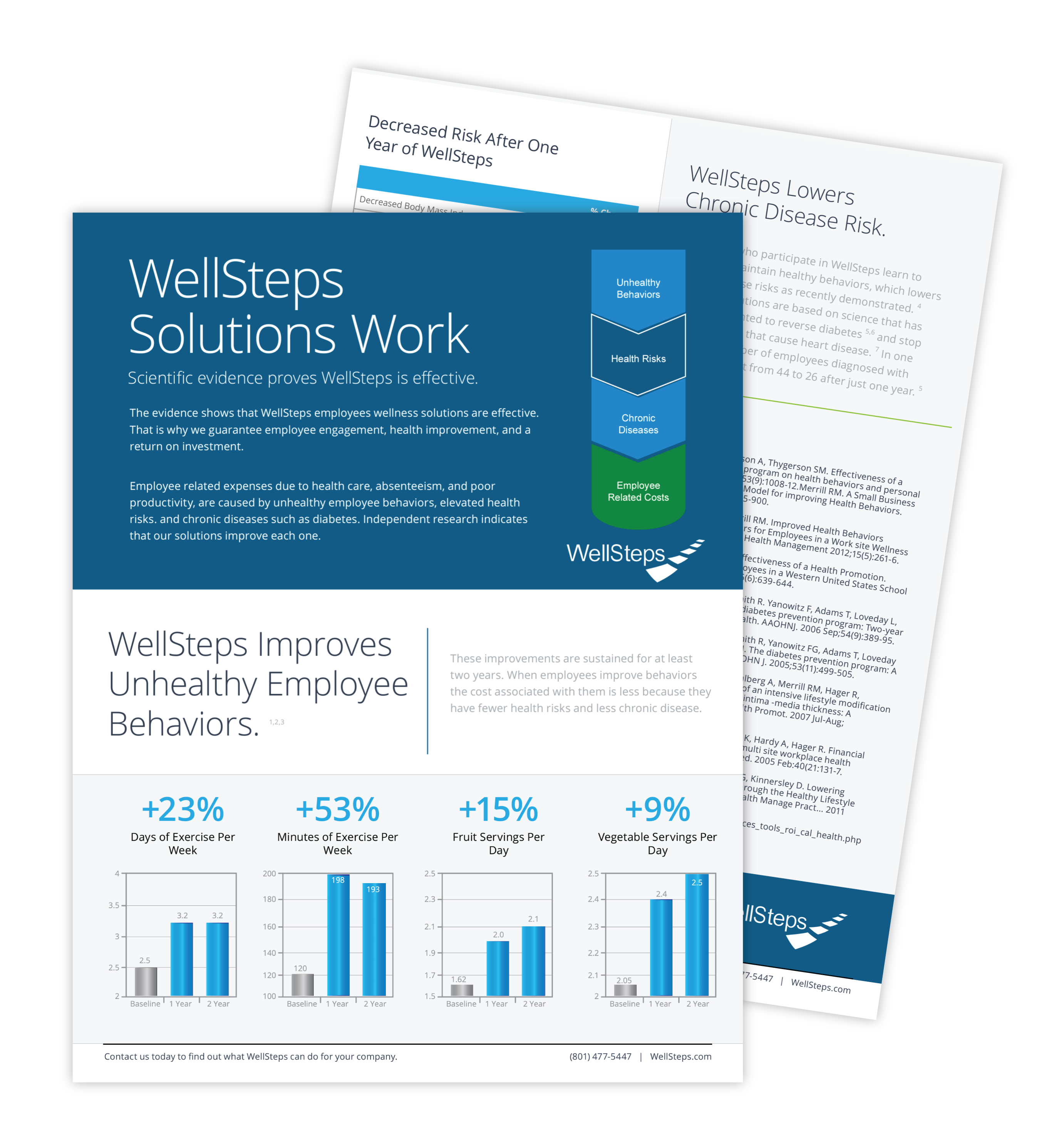
Our approach is grounded in published research, measurable outcomes, and practical workforce wellness strategies that support long-term engagement and behavior change. Our solutions are based on evidence demonstrating positive ROI, changes in health risk, and behavior across companies of all sizes.
See How Evidence-Based Wellness Drives Results
Evidence Based Wellness
WellSteps combines decades of wellness research, behavior-change science, and real-world implementation experience to help organizations improve engagement, support healthier habits, and create measurable workforce wellbeing outcomes.
Our approach is grounded in published research, measurable outcomes, and practical workforce wellness strategies that support long-term engagement and behavior change. Our solutions are based on evidence demonstrating positive ROI, changes in health risk, and behavior across companies of all sizes.
See How Evidence-Based Wellness Drives Results
Metric That Matter & Proven Results
Many wellness platforms promise engagement. Far fewer can point to published research, measurable outcomes, and long-term implementation experience. WellSteps was built around behavior-change science and evidence-based wellness principles designed to help organizations create sustainable workforce wellbeing strategies, not short-term participation spikes.
This research supports the idea that employee wellness programs are most effective when they combine ongoing engagement, strategic support, behavior-change principles, and measurable accountability rather than relying solely on incentives or wellness activities.
What Makes WellSteps Different?
Research alone doesn’t create results. Many wellness vendors reference studies.We combine research with real-world implementation support, guided strategy, behavior-change expertise, and long-term engagement systems to help organizations apply wellness principles successfully across diverse employee populations. Because workforce wellbeing requires more than information alone.
How is the WellSteps model evidence-based?
The goal of all Wellness programs should be to improve employee health behavior cost-effectively. How? Dr. Adams reviewed, then summarized 17 years of evidence to help answer this question. There are basically two approaches: group-based programs like the Coronary Health Improvement Project and the Ornish program, or a one-on-one oriented program such lifestyle health coaching.
We have evaluated both approaches and have concluded that the group-based approach is more effective and cost-effective. The group-based approach significantly improves health and well-being in both community and worksite settings. These studies show that cardiovascular risk factors, depression and stress were reduced, and physical activity, nutrition, and sleep were all improved. The group approach yielded similar results whether the group was facilitated live or via video. We have also reviewed and evaluated the impact of health culture on program outcomes.
Legacy Research
- P17 Years of Evidence
- PImproved Health Outcomes
- PEnhanced Well-Being
- PCommunity Interventions
- PWorksite Interventions
- PReduced Cardiovascular Risk
- PReduced Depression
- P Reduced Stress
- PImproved Physical Activity
- PImproved Nutrition
- PImproved Sleep
- PProgram Presented Live
- PProgram Presented Via Video
- PHealth Culture Review
- PHealth Culture Evaluation
Can wellness programs bend the cost trend for companies?
Dr. Aldana wrote a widely cited review of the impact of wellness programs on financial outcomes. This research and that of many colleagues was used to create the WellSteps ROI Calculator.
Legacy Research
Can wellness programs impact absenteeism, presenteeism, Productivity, and pharmacy utilization?
Dr. Aldana co-authored an important review of wellness program impact on employee absenteeism. We know that lower absenteeism is strongly associated with fewer risk factors, greater physical activity, and lower levels of stress
Legacy Research
Do wellness programs reduce employee chronic disease?
The CDC estimates that 75% of health care costs are due to chronic disease. This is the case for virtually every other health-related employee cost as well. So Wellness programs must have an impact on chronic disease. From the evidence below, we know that well-designed programs can reduce, reverse and even arrest chronic disease.
Legacy Research
Do wellness programs improve quality of life and health outcomes for employees?
We have evaluated several programs in a variety of settings to assess the impact of Wellness programs on quality of life and other health outcomes. The research indicates that wellness programs can be effective whether they are delivered onsite, by a mobile van, in small companies or led by trained peers.
Legacy Research
- PImprovement in Quality of Life and Psychosocial Outcomes
- PImprovement in Clinical and Psychological Outcomes
- PImprovement of Well-Being Indicators
- PImprovement in Mental Health
- P Cardiovascular Risk Reduction
- P Impact on Programs Delivered at the Worksite
- PImpact of Programs Delivered By a Mobile Van
- PSmall Business
- PPeer Led Wellness Program
Can wellness programs change employee health behavior?
If chronic disease is the primary cost driver, what drives chronic disease? According to the Nurses Health Study, 70-90% of chronic disease is related to lifestyle. So an effective wellness program should demonstrate the ability to improve health behavior. Our research indicates that wellness programs can increase physical activity; improve nutrition behaviors such as fruit, vegetable, and whole grain intake.
How can companies effectively promote behavior change among employees?
How to promote behavior change is a much asked research question. To address this question, Dr. Adams designed and coordinated a comprehensive review of leading behavior change theory – The Transtheoretical Model (TTM). The review process consumed 10 years and resulted in several papers. Additionally, theory-based research tools have been developed and evaluated, and the impact of theory-based interventions have been assessed.
Legacy Research
- PReview of the TTM and Exercise
- PReview of the TTM and Dietary Behavior
- PReview of the TTM and Tobacco Use
- PReview of the TTM and Cancer Screening
- PReview of the TTM and Substance Abuse
- PMeasuring Calcium Intake for Women
- PMeasuring Calcium Intake for Men
- PImproving Exercise Behavior
- PDeveloping and Evaluating Worksite-Based Eating Programs
- PAlcohol Education
What associations provide companies with information on the behavior change process?
Understanding the determinants of behavior change is an important piece to the behavior change puzzle. Much research in a variety of populations has been conducted to help us better understand how to promote behavior change.
Legacy Research
- PJob Performance and Absenteeism
- PC-Reactive Protein and Physical Activity
- PPhysical Activity and Stress
- PSmoking and Cholesterol Levels
- PEmployee Physical Activity Trends
- PDeterminants of Weight Gain
- PMental/Physical Factors and Illness
- PWeight Loss and Psychological Health
- PFruit/Vegetable Intake and Several Risk Factors
- P Physical Activity and Mental Health
What psychological factors might influence employee health behavior change?
As we have tried to understand ways to better promote wellness, we have studied attitudes, perceptions and personality characteristics. This understanding has helped as we have built our solutions and designed every campaign.
How important is it to have guided employee wellness or health coaching when implementing a health program in our company?
We provided an overview of the health coaching research. As of 2016, there were only 19 studies supporting the impact of health coaching on a variety of health behaviors. Health coaching is a promising tool that is best used with other wellness tools in a comprehensive program. The evidence supporting the effectiveness of health coaching is growing, but health coaching alone is a very costly and resource-intensive intervention.
Legacy Research
Find us on...
WellSteps has been a trusted employee wellness partner for nearly 20 years, supporting organizations across the country. We work closely with our clients to build meaningful, results-driven programs and to provide a partnership that leads to lasting impact. WellSteps is consistently recognized as a leader in corporate wellness, known for delivering measurable outcomes through a powerful combination of technology, expert guidance, and behavior-change science.