

Executive Summary
How can our wellness program address each employee’s specific approach to wellness?
The honest answer? You don’t try to force every employee into one version of wellness. You adopt a system that adapts to them. Think of your wellness program less like a single “plan”… and more like a platform + guidance ecosystem. The difference in these solutions is what separates low engagement from real behavior change. HR and your wellness committee can’t “custom-build” a different system for every employee. But a guided wellness platform from a top performing vendor can create a flexible framework that allows personalized programs that meet each employee where they are indivudually.
What is wellness?
The word “wellness” is unique in that it cannot be thoroughly defined for any given person at any given time. If you look this word up in a dictionary, you will definitely find a concrete answer; however, each of us has our own personal definition of what gives us a sense of wellness. This is not too difficult a thought in the grand scheme of the world, but in a particular company with particular goals, it can be hard to cater to each employee’s specific approach to wellness.
Something as simple as feeling a sense of wellness or wellbeing in your day-to-day life does not come nearly as simple as one might think. For some, it may come more easily than for others. A common thought to this point might be, “Some people need more support than others.” Another thought could be “Some people are more self-sufficient than others.” While both thoughts may easily be the truth, regardless of the quantity in which you “need”, everyone deserves the same quality of wellness.
Wellness does not come nor does it look the same way to any two people. In fact, many people don’t even know what wellness looks like for themselves or what they need to obtain it. Feeling good in everything that you do would, presumably, be the goal for the majority of the world. Therefore, feeling good in the job that you have and usually, the thing that you spend the majority of your time doing, would also be a common goal across the workforce. Liking what it is that you do can be a major contributor, but this isn’t always possible when it comes to settling down into the job that you’ll have for the rest of your life. The average American working a full-time, forty-hour workweek spends more time with their coworkers than with their families, spouses, or friends. So how can the workplace ensure that the effort and time their employees put in also contribute to their overall quality of life?
How do you start with personal baselines instead of assumptions?

Every HR professional and CEO knows that employees walk in with a different starting point, physically, mentally, and emotionally. Some are managing chronic conditions or recovering from burnout. Others may already be highly active but struggling with stress, sleep, or a sense of purpose. Treating everyone as if they’re starting from the same place isn’t just ineffective; it quietly disengages the very people you’re trying to support. Personal baselines are a foundational element of individualized employee wellness.
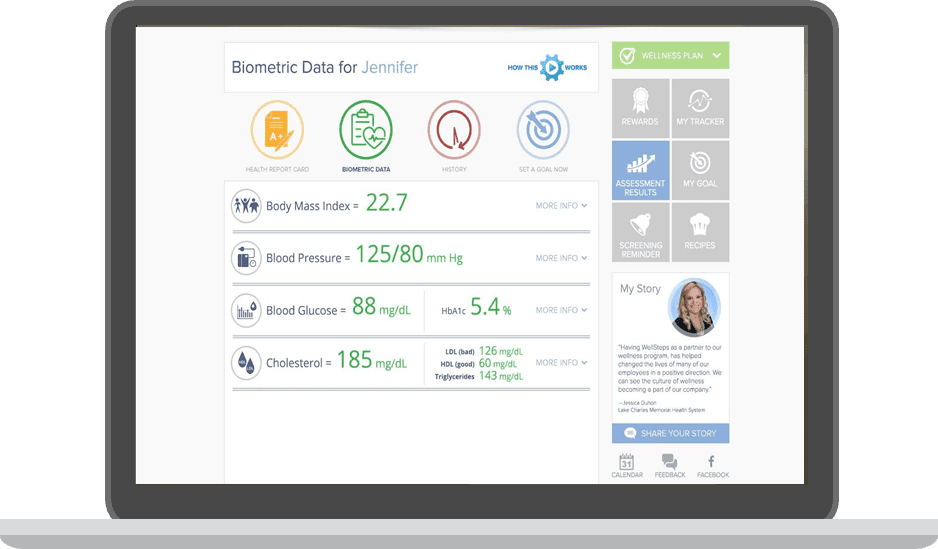
The most effective wellness strategies begin by understanding where people actually are, not where we assume they should be. That means creating space for self-assessments, health risk screenings, and even simple check-ins that uncover real needs, real barriers, and real motivators. When you establish a clear personal baseline, you shift the conversation from generic programming to meaningful progress. Employees who feel seen and understood from the beginning are far more likely to engage, trust the process, and take that next step forward.
What works:
- Health risk assessments (HRAs)
- Interest surveys
- Biometric screenings (optional, privacy-first)
- Self-selected goals
Why it matters:
You’re not guessing what employees need, you’re letting them tell you. It’s the difference between handing everyone the same map… vs. asking where they actually want to go.
How can you offer multiple pathways in a wellness program?

A strong wellness strategy doesn’t say, “Here’s the program.” It says, “Here are your options—choose what fits your life.” Because real life isn’t one-size-fits-all. It’s busy schedules, different energy levels, cultural preferences, varying abilities, and competing priorities; all happening at once.
When organizations offer multiple pathways, they remove friction and invite participation. For one employee, that might look like a structured fitness challenge or step goal. For another, it’s a short mindfulness session between meetings, a nutrition habit builder, or access to health coaching. Some may thrive in social, team-based challenges; others prefer private, self-paced progress. The key is creating a flexible ecosystem where movement, nutrition, mental health, sleep, and stress management are all accessible in ways that feel doable.
Examples of pathways:
- Physical health (movement, fitness, nutrition)
- Mental health (stress, mindfulness, resilience)
- Financial wellness
- Social connection
- Preventive care
Execution tip: Design your program like a Netflix dashboard, not a classroom syllabus.
Employees should be able to:
- Browse
- Choose
- Engage on their own terms
This approach taps into a powerful principle: autonomy drives engagement. When people feel they have a say in how they improve their health, they’re far more likely to start and stick with it. It shifts wellness from a compliance exercise to a personal investment.
Different routes, same destination: better health, higher energy, and more resilient employees. The more entry points you create, the more people you bring along for the journey.
Related: Unlocking the Secrets to a Successful Wellness Program for Your Workforce

How do you build a wellness program around behavior change, not just participation?
A step challenge is easy to launch. Actual lifestyle change? That requires structure. Participation gets people in the door, but behavior change is what keeps them there. More importantly, it is what moves the needle on health outcomes. Too many wellness programs stop at activity: sign up, log steps, earn points. It feels productive, but without a deeper framework, the impact is short-lived.
Real change happens when programs are intentionally designed to guide people from awareness → action → consistency → identity.
That means breaking big goals into small, repeatable habits, reinforcing those habits over time, and creating systems that make the next right choice easier than the old one.
This is where strategy matters. Select habit builders instead of one-time events. Utilize progressive challenges that evolve as employees grow. Think timely nudges, personalized feedback, and coaching that help individuals navigate obstacles in real time. Layer in practical education and connect it directly to daily behaviors that employees can actually implement.
There’s also a psychological shift here: participation is external motivation (“I signed up because I should”), while behavior change becomes internal (“This is just what I do now”). The goal isn’t to get employees to try wellness; it’s to help them become well in a sustainable, repeatable way.
What drives real change:
- Habit-based challenges (small, repeatable actions)
- Progress tracking
- Milestones and rewards
- Ongoing nudges and reminders
Why this works: You’re shifting from: “Did they log in?” to “Did their behavior actually change?” That’s where ROI lives.
Related: Surprising Ways An Individual Can Improve Work Performance
Why is guided support the game-changer in employee wellness?

Technology scales. But individualized guidance makes an impactful difference. Because while platforms can deliver content, track activity, and automate reminders, they can’t replace the nuance of human insight. Technology is the engine, but guidance is the steering wheel. Without it, even the most advanced tools risk becoming just another underused login.
High-performing wellness programs layer in human support that meets employees where they are and helps them move forward with clarity and confidence. That often includes dedicated guides, coaches, or wellness coordinators who interpret data, personalize next steps, and provide accountability that feels supportive, not punitive. It’s the difference between being handed a dashboard and having someone say, “Here’s what this means for you and here’s what to do next.”
These programs also prioritize timely, relevant touchpoints. Not generic reminders, but nudges that arrive at the right moment; after a missed goal, during a stressful season, or when motivation starts to dip. Add in leadership alignment and manager involvement, and wellness isn’t a side initiative; it’s reinforced in daily culture.
Programs that succeed almost always include:
- Health coaches or wellness guides
- Personalized recommendations
- Accountability check-ins
Because most employees don’t need more information… they need clarity + encouragement + follow-through.
There’s a trust factor here, too. Employees are far more likely to engage when they know there’s a real person behind the program, someone invested in their progress, not just their participation metrics. Guidance builds that bridge between intention and action. It’s the difference between having a workout app vs. having someone who notices when you stop showing up
How do you individualize wellness communication, not just content?
Even the best program fails if no one feels like it’s “for them.” You can have world-class resources, beautifully designed challenges, and evidence-based tools, but if the message doesn’t land personally, it gets ignored. Fast.
Individualized employee wellness isn’t just about offering different content options. It’s about how you speak to people; what you highlight, when you reach them, and why it matters in their specific context. A new parent, a frontline worker, and a senior executive aren’t just on different schedules; they’re living entirely different realities. When communication reflects that, engagement shifts from passive scrolling to active participation.
This means segmenting your audience thoughtfully: by role, readiness, goals, and even barriers. It means tailoring messaging to answer the unspoken question every employee has: “What’s in this for me right now?” For someone focused on stress, that might be a quick reset they can do between meetings. For someone managing weight or energy, it might be a simple, actionable habit they can start today. Same program. Different entry point.
What works:
- Targeted messaging by role, interest, or risk level
- Dynamic email/text nudges
- Manager-level encouragement
- Culturally relevant and inclusive content
Example:
- A desk-based employee gets mobility tips
- A shift worker gets sleep optimization content
- A manager gets burnout prevention tools
Timing matters just as much as messaging. The right message delivered at the wrong moment is still the wrong message. Effective programs use behavioral cues and data to trigger communication when it’s most relevant, at the start of a new goal, after a missed milestone, or during predictable high-stress periods. That’s when people are most open to change.
There’s also a tone component that’s often overlooked. Personalized communication feels human. It’s specific, empathetic, and clear, not corporate, generic, or overly polished. It sounds less like a broadcast and more like a conversation. When employees feel like the message was designed with them in mind, they’re far more likely to engage, trust the program, and take action. Same program. Different experience.
Why should a wellness program be flexible instead of fragile?
Life happens. Schedules change. Motivation dips. The reality is, even the most well-intentioned employee won’t follow a perfectly linear path to better health—and your program shouldn’t expect them to. When wellness initiatives are too rigid, they break the moment real life shows up. Miss a few days, fall behind, feel discouraged… and suddenly, people opt out entirely.
Flexible programs, on the other hand, are designed with human behavior in mind. They anticipate inconsistency and build in ways to recover quickly. That might look like rolling start dates instead of fixed deadlines, progress that carries forward instead of resetting, or challenges that allow for “off days” without penalty. It could mean offering both quick-win options for busy weeks and deeper engagement opportunities when capacity is higher.
There’s also a mindset shift here: success isn’t defined by perfection, it’s defined by persistence. When employees feel like they can pause, adjust, and re-engage without starting over, they’re far more likely to stay connected long term. Flexibility removes the all-or-nothing trap and replaces it with something far more powerful: momentum.
Your program should:
- Allow employees to pause and restart
- Offer short and long-form options (5 min vs. 30 min)
- Work across devices and environments
If it only works on a perfect day… it won’t work at all. Programs that last also meet employees across different seasons of life. The same person who’s highly engaged one month may be overwhelmed the next. A flexible structure allows them to scale up or down without losing their place or their sense of progress.
The goal isn’t to create a flawless experience; it’s to create a resilient one that keeps people moving forward, even when life gets messy.
How do you reinforce wellness through culture, not just tools?

Personalization isn’t just digital, it’s environmental. You can tailor content, segment emails, and build beautifully customized dashboards, but if the day-to-day workplace doesn’t support those behaviors, the impact stalls out quickly. Culture is where wellness either takes root or quietly fades away.
Employees don’t just respond to programs; they respond to what’s modeled, rewarded, and normalized around them. If leaders skip breaks, answer emails at midnight, and never engage with the program themselves, the unspoken message is clear: wellness is optional at best, inconvenient at worst. But when leaders actively participate, talk about their own goals, and create space for healthy behaviors during the workday, it signals permission. and even expectation, for others to do the same.
This is where reinforcement becomes powerful. Small, consistent cues embedded in the environment can shape behavior far more effectively than one-time initiatives. Think walking meetings instead of always sitting. Healthy options that are visible and accessible. Calendars that allow for real breaks. Managers who check in on workload and well-being, not just deadlines. Recognition systems that celebrate progress, not just performance.
Support it with:
- Leadership buy-in (visible, not just verbal)
- Wellness committees
- Peer challenges and team engagement
- Policy alignment (flex time, walking meetings, etc.)
There’s also a social layer to consider. People are more likely to adopt behaviors they see reflected in their peers. When wellness becomes part of team conversations, shared wins, friendly challenges, and mutual support, it shifts from an individual effort to a collective experience. That sense of belonging fuels consistency. Ultimately, tools can introduce change, but culture sustains it.
Related: 15 Wellness Engagement Ideas to Build a Culture of Wellness
What is the bottom line for workplace wellness?
A wellness program can’t “custom-build” a different system for every employee. But it can create a flexible framework that feels personal to each one. The formula looks like this:
Personal data + multiple pathways + behavior design + human support + smart communication = individualized wellness at scale
What should companies do next to improve employee wellness?
When you step back and look at the full picture, one thing becomes clear: wellness isn’t a perk, it’s a performance strategy. It influences energy, focus, retention, culture, and ultimately, the long-term success of your organization. But creating a program that actually works—one that people use, trust, and benefit from—requires more than good intentions. It requires the right structure, the right support, and the right partner.
The organizations seeing real results aren’t guessing. They’re building intentional, data-driven wellness strategies that meet employees where they are and guide them forward in a way that feels personal, flexible, and sustainable. They understand that when their people thrive, their business does too.
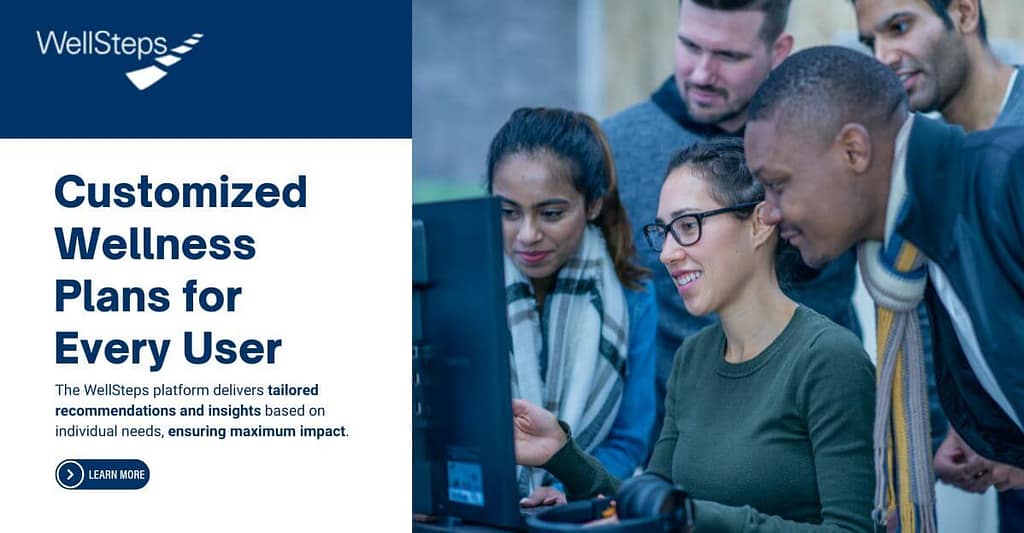
That’s where WellSteps comes in. We help HR leaders, executives, and organizations design wellness programs that go beyond participation and drive real behavior change. By combining smart technology with human coaching and proven strategies, we make it possible to deliver personalized wellness at scale, without adding complexity to your plate.
If you’re ready to move from offering a program to building a culture of well-being, we’re ready to help. Schedule your personalized demo, and let’s create something that works for every employee and your business.
Frequently Asked Questions
An effective wellness program goes beyond participation and focuses on behavior change, flexibility, personalization, and human support. Programs are most successful when they meet employees where they are and offer multiple ways to engage.
Personalization helps employees feel seen, understood, and supported. When wellness options, messaging, and goals are tailored to individual needs, employees are more likely to participate and stick with the program.
Companies can improve engagement by offering choice, reducing friction, providing consistent communication, and making wellness feel relevant to different roles, schedules, and lifestyles. Leadership support and a positive culture also play a major role.
WellSteps helps organizations create wellness programs that combine technology, coaching, and behavior-change strategies. This makes it easier for HR leaders and company leadership to support employees with a program that is scalable, personalized, and effective.