

Executive Summary
What are outcomes-based wellness programs, and why are employers shifting toward them instead of activity-based models?
Outcomes-based wellness programs focus on measurable improvements in employee health, engagement, and organizational performance in addition to participation metrics. These programs use health data as a foundation, then rely on structure, accountability, and ongoing support to turn that data into lasting behavior change.
Employers are shifting toward outcomes-based models because they deliver clearer ROI and more sustainable results than activity-based wellness programs. These results occur when programs are supported by expert human guidance. Such as dedicated guides who manage strategy, communication, and follow-through. This produces outcomes that are not only measurable but also repeatable.
What is an outcome-based wellness program?
An outcomes-based wellness program is a workplace wellness approach focused on measurable improvements in employee health, engagement, and organizational performance. Unlike participation-based programs, it tracks real outcomes, such as reduced health risks and sustained behavior change. It is a workplace wellness strategy built around measurable health improvements, not checklists or “feel-good” activities.
Traditional programs ask:
– Did employees log into the portal?
– Did they complete a challenge?
– Did they attend a webinar?
Outcomes-based wellness programs ask:
- Did health risks decrease?
2. What biometric markers improved?
3. How did behavior actually change?
4. Was there a shift in absenteeism rates or productivity?
At its core, an outcomes-based wellness program:
Begins with data (health risk assessments, biometric screenings, and claims trends)
– Identifies specific, measurable health risks
– Sets structured, realistic goals
– Applies evidence-based behavior change strategies
– Tracks progress and adjusts accordingly over time
This approach aligns with workplace health research from organizations such as the CDC and the RAND Corporation, as well as peer-reviewed studies, which consistently show that behavior change, rather than participation, drives meaningful health improvement and cost impact.
Participation is evidence of activity. Outcomes are evidence of impact. At WellSteps, we know this is a distinction that changes everything.

Why are employers moving away from activity-based wellness?
For years, many corporate wellness programs were built around engagement metrics:
– Step challenges
– Points systems
– Gift cards and prizes
– Login and completion rates
On paper, these programs appeared successful. Employees signed up, steps were logged, incentives given, and morale briefly improved.
Then, leadership teams started asking a harder question:
“Are we actually improving health, or just running activities?”
The RAND Workplace Wellness Study found that while participation-based programs can improve engagement, their direct impact on healthcare cost reduction is limited unless paired with structured disease management and behavior change initiatives.
Meanwhile, executives and HR leaders face growing pressure to:
– Justify every dollar of wellness spend.
– Demonstrate measurable ROI.
– Manage rising healthcare costs.
– Improve productivity, retention, and morale.
Participation metrics alone don’t meet these demands. Outcomes-based wellness programs do. Especially when they’re guided and managed with intention, not left to run on autopilot. Outcomes-based wellness works best when it’s not just a platform, but a partnership, and that’s exactly where the WellSteps program and our expert Guides change the game. Data without a human-directed strategy is insight without impact. The true value comes from the synergy of our technology and dedicated experts working together to drive results you can measure.
How do outcome-based wellness programs actually drive results?
Well-designed outcomes-based wellness programs work because they follow the science of behavior change and pair it with real-world implementation. They are not just digital platforms; they are structured systems supported by people, process, and data.
They typically combine four core elements:
1. Data-Driven Targeting
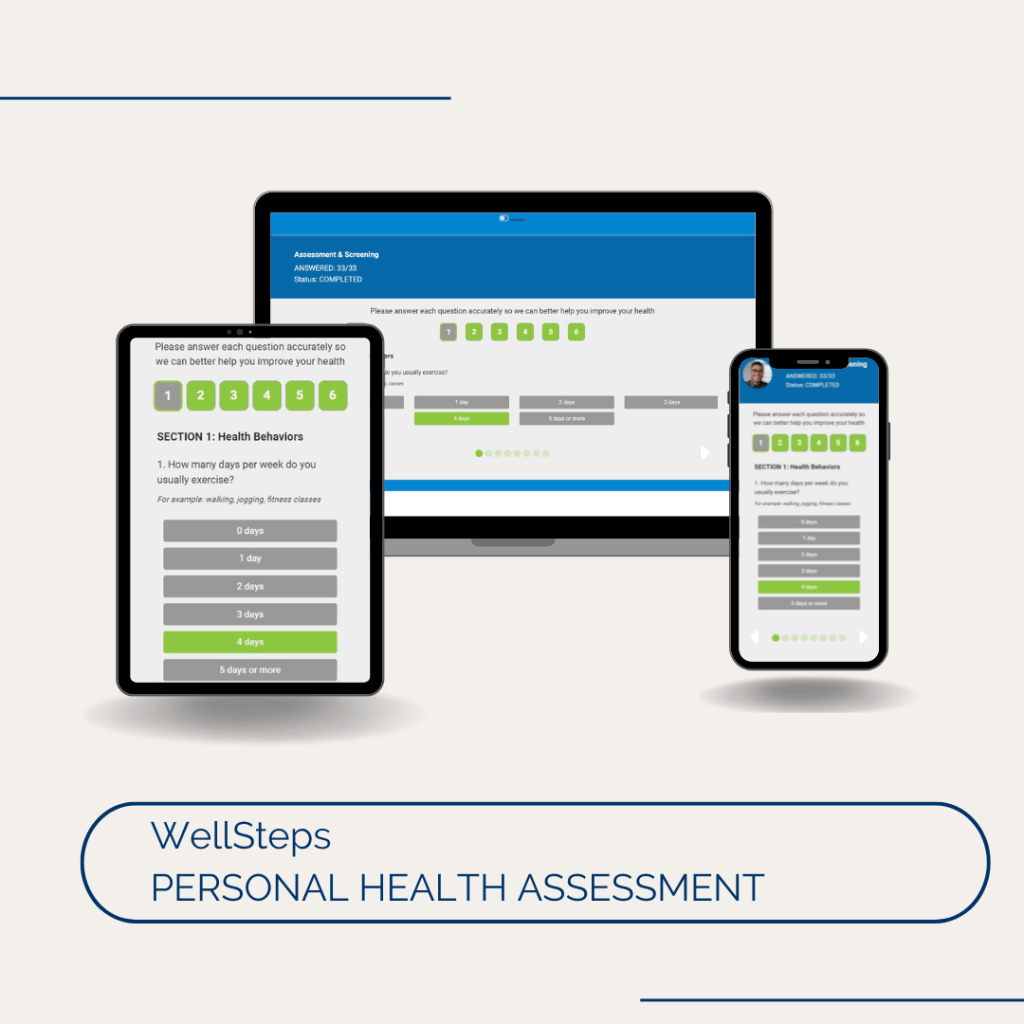
Health risk assessments, biometric screenings, and tools like the WellSteps Workplace Wellness Assessment (“Checklist to Change”) surface:
– Elevated blood pressure
– Prediabetes indicators
– Obesity and metabolic risks
– Stress and mental health risk factors
– Culture and environmental barriers to healthy behavior
So, instead of guessing which programs employees might like, employers can prioritize high-impact risk categories and environmental changes that truly move outcomes. This mirrors precision medicine: diagnose first, intervene strategically. By equipping employees to believe they can change and reinforcing their sense of personal agency, outcomes-based wellness programs help turn data into effective action, aligning directly with principles from Social Cognitive Theory.
With WellSteps, this isn’t a one-time exercise. Guides help employers interpret aggregate data, set realistic goals, and build a roadmap that connects employee health to organizational objectives.
2. Personalization
Behavior change research consistently shows that personalized interventions outperform generic ones. Employees are far more likely to act when the program speaks directly to their circumstances, motivations, and barriers.
Effective outcomes-based programs personalize:
– Goals and incentives
– Communications and reminders
– Coaching touchpoints
– Learning content and campaigns
WellSteps delivers this personalization through targeted behavior change campaigns, tailored communications, and configurable program designs. Meeting organizations where they are, whether they are just starting a wellness initiative or optimizing an established strategy. By making goals and actions more relevant to each individual, personalization helps spark intrinsic motivation by nurturing employees’ passion, perseverance, and grit. So, when employees see that their wellness journey is directly connected to their unique needs and aspirations, they are far more likely to stay engaged and committed over the long term.
3. Accountability & Structure
Knowing you have a risk is one thing. But, having a clear, supported path to address it is another entirely.
Employees need:
– Clear next steps
– Defined milestones
– Progress tracking and feedback
– Regular follow-up communication
– Positive reinforcement and nudges
Behavior change models like the AMSO and Social Cognitive Theory highlight the importance of structured progression, reinforcement, and self-efficacy. Outcomes-based programs bake that structure into their design rather than leaving employees alone with their data. For example, a typical milestone ladder might guide an employee from step one, “knowing your numbers” through a health assessment, to step two, “setting a personal goal” such as lowering blood pressure, to step three, “building action steps” like adding one walk per week, and on to step four, “sustaining a weekly activity habit.” Each milestone unlocks the next, helping employees experience early wins and gradually build confidence and mastery, which are key components of the self-efficacy cycle.
WellSteps operationalizes this through:
– Step-by-step campaigns and challenges that target specific risks
– Incentive management tied to meaningful behaviors
– Regular, branded communications managed or co-managed by WellSteps Guides
– Annual reporting that shows progress and informs next year’s plan
4. Guided Support

This is where many programs succeed — or quietly collapse. Software alone does not drive outcomes. Dashboards do not coach employees. Reports do not present themselves to leadership with a strategic narrative. Human guidance is the multiplier and the key to ROI.
WellSteps Guides act as:
– Strategic partners to wellness committees and HR
– Project managers for campaigns and rollouts
– Translators of data into action plans
– Storytellers who frame results for executives
Our guides are “the key to unlocking your organization’s wellness success,” providing step-by-step strategies, culture-change support, and ongoing insight to keep programs moving forward.
When technology is paired with this level of guided oversight, outcomes-based programs are far more likely to show improvements in:
– Health risk reduction
– Sustained participation over time
– Employee morale and culture
– Productivity and absenteeism trends
Why do many outcome-based wellness programs fail?
Here’s the uncomfortable truth: Many organizations claim to run outcomes-based wellness programs. Few execute them well enough to earn that label. Common failure points include:
Overreliance on Technology
Platforms that generate impressive-looking reports but lack structured follow-through create awareness, not action. Employees see their risk scores… and then nothing happens. Research summarized in sources such as JAMA shows that technology-only approaches rarely deliver strong, sustained health or cost outcomes.
Lack of Program Management
Without someone actively steering the ship, campaigns lose momentum. Communications become inconsistent. Leadership engagement fades. Reporting becomes reactive instead of strategic.
Incentive-Heavy, Behavior-Light Design
If the primary motivator is a gift card, engagement will likely evaporate once the reward is received. Behavioral economics and organizational psychology research highlight the role of intrinsic motivation, autonomy, mastery, and purpose in sustaining change.

Poor Executive Alignment
When wellness is isolated within HR and disconnected from broader business goals, it’s hard to link outcomes to the metrics executives care about.
Outcomes-based programs must align with:
– Absenteeism and presenteeism data
– Productivity measures
– Healthcare cost strategies
– Retention and culture targets
Without this alignment, ROI is difficult to quantify — and easy to question. This is precisely where a structured partner like WellSteps, with expert guides, can close the gap between “good idea” and “measurable impact.”
What role do wellness guides play in achieving optimal outcomes?
Imagine you’re remodeling your house. You could buy the best tools and materials, watch a few videos, and hope for the best, or you could hire an experienced contractor to manage the project. That’s the difference between a DIY wellness platform and a guided outcomes-based program.
WellSteps Guides are:
– Seasoned wellness professionals who understand corporate culture, HR realities, and behavior change
– Strategic partners who help set goals, timelines, and success metrics
– Execution experts who keep campaigns, communications, and reporting on track
Guides help employers interpret assessments such as the “Checklist to Change,” identify high-impact opportunities, and design a phased roadmap that aligns with each organization’s culture, budget, and readiness.
They support organizations by:
– Collaborating with wellness committees and brokers
– Recommending campaigns and communication strategies
– Troubleshooting participation and engagement barriers
– Ensuring programs remain HIPAA-compliant and respectful of employee privacy
In other words, Guides ensure that wellness is not just launched… it is led. You’re not left alone with a portal and a login. You have a partner who understands both your people and your performance goals.
What do successful outcome-based wellness programs include?
High-performing outcomes-based wellness programs, including those powered by WellSteps, typically include:
– Health risk assessments and biometric screenings
– Personalized action plans and campaigns
– Evidence-based behavior change tools and challenges
– Ongoing communication campaigns (emails, posters, webinars, app notifications)
– Executive-level reporting dashboards showing trends and outcomes
– Data privacy protections and HIPAA-aligned processes
– Structured accountability checkpoints and annual reviews
– Dedicated program management from a WellSteps Guide or a trained internal champion
They measure more than participation. Employers track:
– Health risk reduction across their population
– Biometric improvement trends over time
– Sustained engagement, not one-off spikes
– Absenteeism shifts and productivity indicators
These metrics give leadership something concrete to evaluate. Not “Did people log in?” but “Did health risk meaningfully decrease, and did that influence our costs and culture?” That’s a strategic difference and a powerful story to share in the boardroom.

How does the WellSteps program deliver outcome-based results?
WellSteps offers flexible solutions designed to meet organizations at different stages of their wellness journey while keeping outcomes at the center.
Key elements include:
– A comprehensive wellness platform with campaigns, incentives, and reporting
– Outcomes-focused designs that can incorporate disease management and higher-risk support
– Options for brokers, carriers, and resellers to white-label the program and deliver it to multiple employer groups
– Cost-effective models, with options as low as $0.99 per participant per month
Independent research shows improvements in health risks, engagement, and cost-related outcomes when their solutions are implemented and managed effectively.
In short: WellSteps provides the platform, the process, and — most importantly — the people to make outcomes-based wellness real, not theoretical.
Why are outcome-based employee wellness programs becoming the “gold standard”?
Largely because organizations know that healthcare costs continue to rise faster than inflation, mental health challenges affect productivity, and hybrid or remote workforces require more intentional employee support.
In this environment, employers are demanding:
– Measurable value
– Clear accountability
– Transparent reporting
– A strategic connection between wellness and overall business performance
Participation-based wellness feels dated. Outcomes-based wellness feels accountable, modern, and necessary.
As organizations mature in their wellness strategy, conversations are shifting from:
“How many people joined the step challenge?”
to
“What measurable impact did this program have on risk, cost, and culture?”
That shift is why outcomes-based wellness programs, especially those backed by expert guidance like WellSteps Guides, are rapidly becoming the gold standard. Because when wellness is guided, structured, and aligned with business goals, it doesn’t just look good on a dashboard. It moves the numbers that matter. Wellness is no longer about running challenges. It’s about running strategy, with the right partner at the table.
Notably, when designed correctly and guided intentionally, outcomes-based wellness programs provide what every executive values:
– Clarity
– Accountability
– Measurable progress
With WellSteps and its expert Guides, you’re not just checking the box on wellness, you’re building a healthier workforce, a culture of wellness, and a stronger organization, one evidence-based outcome at a time.
Request a personalized demo to experience firsthand the ways our solutions provide your organization with the wellness outcomes that result in increased success.
References
Centers for Disease Control and Prevention (CDC). “CDC Workplace Health Model.” Accessed 2024. https://www.cdc.gov/workplace-health-promotion/php/model/index.html
Centers for Disease Control and Prevention (CDC). “Workplace Health Promotion.” Accessed 2024. https://www.cdc.gov/workplace-health-promotion/php/index.html
Centers for Disease Control and Prevention (CDC). “Strategies for Building a Workplace Health Program.” Accessed 2024. https://www.cdc.gov/workplace-health-promotion/php/model/building.html
Centers for Disease Control and Prevention (CDC). “Work@Health Program Curricula.” Accessed 2024. https://www.cdc.gov/workplace-health-promotion/php/training/index.html
Harvard Business Review. “Why So Many Workplace Wellness Programs Don’t Work.” Accessed 2024. https://hbr.org/2019/05/why-so-many-workplace-wellness-programs-dont-work
National Institutes of Health (NIH). “The Precision Medicine Initiative.” Accessed 2024. https://www.nih.gov/precision-medicine-initiative-cohort-program
RAND Corporation. “Workplace Wellness Programs Study: Final Report.” 2013. https://www.rand.org/pubs/research_reports/RR254.html
Song, Z., & Baicker, K. “Effect of a Workplace Wellness Program on Employee Health and Economic Outcomes.” JAMA, 2019;321(15):1491–1501. https://jamanetwork.com/journals/jama/fullarticle/2730614
U.S. Department of Labor. “Workplace Wellness Programs Study.” Accessed 2024. https://www.dol.gov/agencies/ebsa/researchers/analysis/health-and-welfare/workplace-wellness-programs-study
American Psychological Association. “Behavior Change.” Accessed 2024. https://www.apa.org/monitor/2012/06/behavior-change
Bandura, A. “Social Cognitive Theory.” (Overview via Simply Psychology.) Accessed 2024. https://www.simplypsychology.org/social-learning-theory.html
Behavioral Scientist. “Behavioral Economics and Health.” Accessed 2024. https://behavioralscientist.org/
Frequently Asked Questions
Outcomes-based wellness programs emphasize health improvements and long-term impact, while activity-based programs focus on participation and task completion. Activity-based programs may increase short-term engagement but often fail to produce lasting results without structure and behavior change strategies.
Yes! Especially when they combine data, personalization, accountability, and guided support. Programs with strong design and human oversight have been shown to improve health behaviors and create more favorable cost and productivity trends over time.
They often fail when they rely solely on software or data. Without structure, guidance, and follow-through, employees may understand their health data but struggle to take meaningful action. A lack of executive alignment and program management also undermines long-term success.
They drive ROI by reducing health risks that contribute to healthcare costs, improving productivity, and supporting employee well-being over time. Measurable outcomes enable employers to link wellness initiatives to financial and cultural outcomes.
Personalization ensures wellness programs address individual needs, motivations, and health risks. Tailored campaigns and communications increase engagement and make sustained behavior change more likely.
Guided support helps employees and organizations translate health data into action. Ongoing program management and expert guidance increase accountability, adaptability, executive buy-in, and long-term success. WellSteps Guides are specifically trained to provide this level of partnership.