

Executive Summary
How much does an employee wellness program cost and what should you expect to pay?
Employee wellness programs typically cost between $24 and $54 per employee per year for a platform, with total annual costs ranging from about $100 to $750 per employee, depending on program depth. Additional services like biometric screenings, coaching, and incentives can increase costs, but programs can be scaled to fit almost any budget. Many organizations see a return of $1.47 to $3 for every dollar spent by reducing health risks and improving productivity. The most effective programs balance cost with strategy, focusing on behavior change and high-impact components rather than simply adding expensive features.
If you’re thinking about launching an employee wellness program, you’ve probably wondered how much it’s going to cost. The truth is, there’s a wide range, mostly because the price depends on the depth and breadth of what you want to offer.
First, it would help to answer a few questions to narrow down exactly what you are looking for.
- Do you want a singular component like an HRA? Just Challenges? Just Rewards?
- Are you looking for an out-of-the-box, easy-to-start, low-cost (low customization) option?
- All the bells and whistles? Comprehensive program with culture strategy built in?
Let’s break down the real numbers so you can plan with confidence and set realistic expectations.
What does a typical wellness program cost?
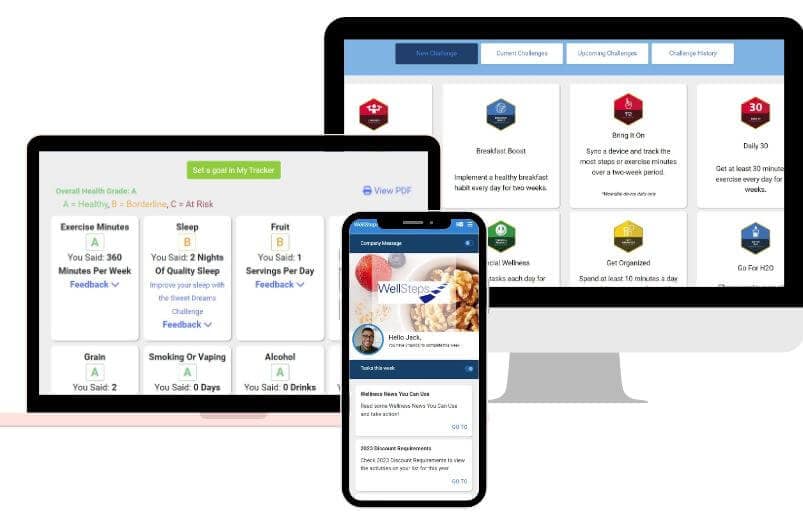
The annual cost of a comprehensive wellness program usually falls somewhere between $150 and $1,200 per employee. That broad range reflects whether you’re offering just the basics or a full suite of services, from simple health challenges to advanced coaching and biometric screenings (WellSteps; Wellable; Vantage Fit).
If you use a proprietary wellness platform like WellSteps, most companies pay between $2 and $4.50 per employee per month, or $24 to $55 per employee per year. This typically includes a mobile app, health risk assessments, incentive management, fitness challenges, and device integrations. Larger organizations often pay toward the lower end of that range due to economies of scale.
Related: The Costs and Advantages of an Employee Wellness Program
What About Add-On Services?
The core platform cost doesn’t include everything. Here’s what to expect for common add-ons:
Biometric screenings (blood work analysis): $36–$80 per employee, depending on the provider and the number of employees screened (LabCorp, Biometric Screening Vendors).
Health coaching (6 sessions): $140–$165 per employee.
Benefits-based incentives: $200–$800 per employee annually. Some companies, for example, offer $50/month insurance premium discounts, totaling $600 per year for each qualifying employee, but this can be dialed up or down based on your budget and goals.
It’s also worth noting that lower-cost incentives, think gift cards or company swag, can still drive participation, especially when paired with engaging wellness challenges.
Related: Hidden Wellness Dollars Utah Employers Can Use to Invest in a Wellness Platform
Balancing Cost and Return

You don’t have to go all-in on expensive options to see a benefit. Many companies find that wellness challenges and simple incentives can drive engagement without the heavy price tag of health coaching or on-site fitness centers. Studies suggest that while premium offerings are appealing, high costs for coaching and facilities don’t always guarantee a stronger return.
The average ROI for wellness programs in 2024 lands between $1.47 and $3 for every dollar spent (Select Software Reviews; SHRM). Some organizations report even higher returns, especially if they focus on prevention and early intervention (SFMIC).
Related: How to Present Wellness ROI Data That Actually Convinces an Employer to Buy
Reseller Model: A Cost-Saving Option
If you’re a large employer or broker looking to scale, a reseller model can drop costs significantly. WellSteps, for instance, offers this option starting as low as $6 per employee per year, letting you manage wellness in-house and reduce the need for dedicated staff.
Related: Resell Wellness? Being a Wellness Reseller Might Make Sense
Sample Budget for a Mid-Sized Company
Say you have 350 employees and choose a $26 per employee per year platform:
Wellness platform: 350 x $26 = $9,100
Add biometric screenings, health coaching, and incentives as needed.
Related: One Powerful Wellness Platform for Mid-Size Companies

Corporate Wellness Program Costs: How to Build a Budget That Delivers Value
Understanding corporate wellness program costs is about more than comparing monthly subscription prices. For HR leaders, benefits brokers, and business decision-makers, the real question is: What will our organization spend, what will employees receive, and how will we measure success?
The cost of corporate wellness programs depends on workforce size, program features, implementation requirements, incentives, and the level of ongoing support. A successful budget accounts for both the initial investment and the resources needed to build lasting healthy habits.
What Determines Worksite Wellness Program Costs?
When comparing worksite wellness program costs, employers should consider six important factors:
- Platform and technology fees: Digital wellness platforms may include health assessments, activity tracking, wellness challenges, educational resources, personalized recommendations, and reporting dashboards. Pricing may be calculated per employee per month or annually.
- Implementation and administration: Account setup, employee onboarding, communications, integrations, and ongoing program management can affect total costs. Ask which services are included in the vendor’s base price.
- Employee incentives: Gift cards, recognition programs, wellness rewards, and benefits-based incentives can encourage participation. Incentive budgets should reflect organizational goals and employee preferences.
- Health screenings and coaching: Biometric screenings, individualized health coaching, and specialized wellness services may require additional investment.
- Customization and integrations: Branded experiences, tailored wellness campaigns, device syncing, and connections to existing benefits systems may influence pricing.
- Reporting and evaluation: Participation data, engagement trends, health risk changes, and program outcomes help employers understand whether their investment is producing meaningful value.
The least expensive program isn’t necessarily the most cost-effective. A low monthly fee offers limited value if employees rarely use the platform or the organization cannot measure results.
Sample Corporate Wellness Program Budget for 100, 500, and 1,000 Employees
To illustrate how wellness expenses scale, consider a hypothetical program with a platform cost of $36 per employee annually and an optional $50 annual incentive budget.
| Organization size | Annual platform cost | Optional incentives | Combined annual budget |
|---|---|---|---|
| 100 employees | $3,600 | $5,000 | $8,600 |
| 500 employees | $18,000 | $25,000 | $43,000 |
| 1,000 employees | $36,000 | $50,000 | $86,000 |
These are illustrative planning scenarios, not WellSteps price quotes. Actual pricing, participation-based costs, implementation expenses, and optional services vary by vendor and agreement. Screenings, coaching, and additional administrative expenses are not included.
For organizations working within a limited budget, a phased rollout can make wellness more accessible. Start with foundational tools, personalized wellness resources, and engaging challenges. Expand into additional services as employee needs and program results become clearer.
How Can Employers Calculate Wellness Program ROI?
A wellness program’s financial value should be evaluated using measurable outcomes, not participation alone.
Employers can track several indicators:
- Healthcare spending: Changes in medical claims and preventable health risks over time.
- Absenteeism: Trends in employee sick days and associated productivity costs.
- Employee retention: Changes in turnover and the costs of replacing employees.
- Engagement: Participation, challenge completion, and continued use of wellness resources.
- Health behavior improvements: Changes in physical activity, nutrition, stress management, and other measurable behaviors.
For example, consider an organization investing $40,000 annually in its wellness program.
If a carefully designed evaluation attributes $60,000 in financial benefits to the program, its hypothetical net ROI would be:
($60,000 − $40,000) ÷ $40,000 × 100 = 50% ROI
That represents $1.50 in benefits for every dollar invested, or $0.50 in net financial return.
This is an illustration, not a guaranteed outcome. Employers should account for evaluation periods, outside influences, and the difference between observed improvements and savings attributable to the program.
How to Compare Corporate Wellness Vendors Beyond Price
Before selecting a wellness provider, HR leaders and benefits brokers should ask:
- What is included in the per-employee price, and what costs extra?
- Are there minimum enrollment requirements or annual commitments?
- What implementation, employee onboarding, and administrative support are included?
- Can the program be customized for different employee populations and budgets?
- Does the platform provide personalized wellness experiences and convenient mobile access?
- What reporting is available to evaluate engagement, health outcomes, and program effectiveness?
- Are there broker, reseller, or white-label options for organizations managing multiple employer groups?
These questions help decision-makers compare total cost, service quality, and long-term value rather than selecting a vendor based on a single advertised price.
Making Corporate Wellness Affordable Without Sacrificing Outcomes
An effective wellness program doesn’t have to begin with an expensive, all-inclusive package.
WellSteps helps employers approach wellness as a long-term behavior-change strategy, combining accessible technology, engaging wellness activities, personalization, and expert guidance. Instead of simply providing another employee benefit, the goal is to help people build healthier routines that fit into everyday life while giving organizations meaningful ways to evaluate progress.
Ready to understand what a wellness program could cost your organization? Explore WellSteps’ flexible wellness solutions and request a personalized demonstration to discuss your workforce, goals, and budget.
Why Invest Now?
Three big reasons stand out: increasing evidence that wellness is a successful business strategy, rising rates of obesity and diabetes, and the relentless climb of healthcare costs. Even during tough times, the cost of poor health and lost productivity makes wellness programs a necessity—not a luxury.
RELATED: How Adding Wellness to Your Benefits Portfolio Sets You Apart From Every Other Broker
Key Elements to Maximize Impact
To get the most from your investment, your program should include:
Medical screenings
Incentives for healthy behaviors
Behavior change campaigns
Health coaching
Fitness, nutrition, and weight loss support
Social support and gamified wellness challenges
Is It Worth It?

Poor employee health leads to higher costs and lower morale. Wellness programs help people make healthier choices, reduce risk, and foster a more positive, productive workplace. When you weigh the cost of action against the price of doing nothing, the value is clear, especially with today’s focus on prevention and employee engagement.
At WellSteps, we help companies build affordable, scalable wellness programs that actually deliver results. If you’re ready to see how a data-driven approach can transform your workplace, reach out for more details or a personalized demo.
Frequently Asked Questions
The cost of a workplace wellness program with incentives included typically ranges from $100 to $750 per employee per year, depending on how comprehensive the program is. Basic programs with limited features cost less, while full-service programs that include coaching, screenings, and incentives cost more. Most companies using a wellness platform pay between $2 and $4.50 per employee per month ($24–$54 annually), with lower costs often available for larger organizations.
In addition to the core platform, many companies invest in add-on services to enhance results. Common additional costs include:
Biometric screenings: $36–$80 per employee
Health coaching: $140–$165 per employee (for multiple sessions)
Incentives: $200–$800 per employee annually
These optional services can improve engagement and outcomes, but companies can scale them up or down based on budget and goals.
Most workplace wellness programs generate a return of $1.47 to $3 for every dollar spent. Some organizations see even higher returns when programs focus on prevention and early intervention.
ROI typically comes from lower healthcare costs, reduced absenteeism, improved productivity, and better employee retention, making wellness programs a strategic investment rather than a discretionary expense.
Yes—companies can control costs and still achieve strong results by focusing on high-impact, lower-cost strategies. Wellness challenges, simple incentives, and behavior-change campaigns often drive meaningful engagement without requiring expensive services like on-site facilities or intensive coaching. Additionally, options like reseller models can reduce costs significantly—sometimes to as low as $6 per employee per year, while still providing access to effective wellness tools and infrastructure.