

Executive Summary
How does employee wellness help brokers differentiate their benefits portfolio?
Employee wellness helps brokers stand out by shifting their role from selling plans to improving workforce performance. Instead of competing on price alone, brokers can offer measurable outcomes like lower health risks, better retention, and higher productivity. This positions them as strategic advisors, not transactional vendors. As a result, brokers build stronger client relationships and become harder to replace.
How Does Employee Wellness Help Brokers Differentiate Their Benefits Portfolio?
The role of a benefits broker has quietly, but fundamentally, changed. Previously, success meant securing competitive rates and presenting clear renewal spreadsheets. Now, that’s expected.
Employers are posing a new question: “How do we build a healthier, more productive workforce without driving costs even higher?”
That shift creates a clear opportunity within the corporate wellness broker strategy space. The focus of increasingly successful brokers is centered on wellness portfolio differentiation.
Implementing employee wellness solutions redefines your value. It reframes you from a transactional provider into a strategic partner. In a saturated market where most brokers sound alike, this distinction is crucial.
Employers want measurable impact, such as lower claims risk, stronger retention, improved engagement, and a supportive culture. Wellness, when executed effectively, directly delivers these benefits and distinguishes you from other brokers.
WellSteps has nearly 20 years of experience offering employee wellness solutions for brokers. Our Broker Partnership supports broker success and elevates brokers above the crowd. Ensuring differentiation in competitive renewal cycles, simpler selling and shorter sales conversations, increased relationship depth & client retention, and low admin lift. These are just some of the practical ways we help brokers win and keep business.
Related: How Insurance Brokers Can Win with Workplace Wellness Programs
The Moment Brokers Started Losing Differentiation

In a typical renewal season, there are often at least two brokers with the same employee wellness vendors. Offering similar plan designs with nearly identical pricing models. From the employer’s perspective, it’s hard to tell the difference.
This echoes a broader market trend. As digital quoting tools and carrier access become more standardized, traditional broker services are increasingly seen as commodities. At the same time, employers are taking on more fiduciary responsibilities and are becoming more focused on the value of the services they purchase, according to a report from Techtarget.
According to McKinsey, employee health and well-being are now core drivers of organizational performance—not optional perks.
Deloitte reports that organizations investing in workforce wellbeing see improvements in retention, productivity, and overall business resilience.
So while most brokers are still showing spreadsheets… employers are thinking about burnout, turnover, and long-term cost control. That gap is where broker wellness program differentiation lives. This is where the WellSteps solutions, tools, and guides benefit brokers and their clients alike. When the conversation changes, the relationship changes.
Related: How Wellness Programs Create a New Revenue Stream for Benefits Brokers
Why Does Adding Wellness to Your Benefits Portfolio Set Brokers Apart?
The moment you stop leading with: “Here’s your renewal increase…” and start leading with: “Here’s how we can reduce preventable health risks over the next 12–24 months…” then everything changes.
One exchange is reactive; the other is strategic. Strategic discussions build trust quickly because they align with executives’ views on business performance. The employee wellness program you introduce bridges benefits and business outcomes.
WellSteps helps brokers move from plan sellers to strategic advisors by making wellness easier to implement, easier to explain, and easier to prove.

Why Is Wellness Is No Longer a “Nice-to-Have”?
For years, wellness programs suffered from a reputation issue. They were seen as soft, optional, or not measurable. That perception has not survived the past decade.
Modern, evidence-backed, outcomes-based wellness programs are now linked to outcomes employers care about:
— Lower absenteeism and improved productivity (CDC Workplace Health Model)
— Reduced burnout and improved engagement (Gallup research)
— Stronger retention tied to wellbeing support (APA Work and Well-being Survey)
— Long-term reduction of preventable health risks like obesity, inactivity, and chronic disease (NIH article)
So, what changed? There are two main things:
— Better data and reporting
— A focus on whole-person health: mental, physical, financial, and social wellbeing.
Employers aren’t just investing in perks anymore. They’re investing in performance infrastructure.
Related: Enhancing Employee Productivity: Why It’s Beneficial for Employees and Not Just the Company
What Do Your Current and Future Clients Really Want?

Employers don’t want more options. They want clarity.
If you’ve worked with HR leaders recently, you’ve seen it. They’re buried. Recruiting pressures. Compliance issues. Culture challenges. Mental health concerns. Leadership expectations. The list goes on… and adding ten more vendor options creates clutter, not value.
Employers appreciate guidance. They want someone who can say: “Here’s what matters. Here’s what will work. Here’s why.”
Presenting a vetted, strategic wellness solution signals you’re not only informed but also simplifying complexity for them. That’s the distinction between a broker and an advisor. Filtering complexity on their behalf is a value-added difference maker that benefits brokers and clients alike.
Related: Why Employee Wellness Programs Simply Cannot Wait: The Real Value for Your Company
How Does Offering Wellness Make Client Relationships Last Longer?
Brokers typically connect with clients a few times per year: during renewal season and perhaps at a mid-year check-in. Wellness changes that cadence entirely. Brokers become benefit partners that are a part of ongoing conversations about:
Instead of showing up twice a year, you’re embedded year-round. And that matters, because frequency builds familiarity, and familiarity builds trust.
If your value as a broker is focused on quoting benefits plans, you’re replaceable. Integrating workforce wellbeing and performance improvement makes replacing you a much bigger decision. This solidifies your role by delivering the measurable benefits employers want, such as engagement, retention, and reduced risk.
Wellness programs can shift brokers from a renewal-season touchpoint to a year-round strategic partner, because effective wellness work requires ongoing communication, participation tracking, and program management. Organizations that are involved with their employee wellness benefits broker tend to stay with that broker. WellSteps helps employee end-users, company ROI, organizational leadership, and supports broker client retention.
Related: What Is a Broker Wellness Partnership and How Does It Work?
What Are The Best Wellness Strategies?

It is the ones that feel human. Let’s be honest, employees can spot a “check-the-box” wellness program instantly. Generic portals. Low engagement. Minimal behavior change. That model doesn’t work anymore.
Today’s most effective programs are built around:
— Behavioral science and habit formation
— Personalized experiences
— Ongoing coaching and guided support
— Simple, accessible participation
— Real human interaction, not just dashboards
Gallup consistently finds that employees who feel supported in their well-being are significantly more engaged and productive. Simply put, employee engagement isn’t just a “nice metric”. It is a business success strategy. It directly impacts performance, retention, and profitability. In other words, the programs that feel human…perform better.
How Brokers Can Use Wellness to Win More Benefits Clients?
Brokers who speak the language executives care about win more clients. HR may champion wellness, but executives fund it. That means your framing matters.
The most effective broker conversations connect wellness to:
— Workforce stability: Turnover is expensive, often costing 50–200% of an employee’s salary. SHRM also notes in their Retaining Talent: A Guide to Analyzing and Managing Employee Turnover that total turnover costs can range from 90% to 200% of an employee’s annual salary
— Productivity: Presenteeism and burnout quietly erode output across teams
— Healthcare costs: Preventable conditions continue to drive a large portion of claims spend
— Employer brand: Candidates increasingly evaluate wellbeing support when choosing employers
According to Gallup, employee well-being is a strong predictor of future absenteeism, job performance, healthcare usage, employee engagement, and turnover. This means that investing in workforce wellness can impact workforce stability by helping to reduce turnover, improve productivity by addressing issues like presenteeism and burnout, and manage healthcare costs by encouraging healthier habits. Additionally, Gallup notes that well-being support has become an important factor for job candidates when evaluating employers. By connecting employee wellness offerings to these outcomes, brokers can expand the conversation beyond HR to include broader business goals.
Brokers who link employee wellness offerings to these outcomes can move the conversation out of HR and into the boardroom. And every broker knows that this shift increases the likelihood of a new client. It is a shift that simply can’t be ignored.
Does Wellness Help Future-Proof Your Brokerage?
Yes – it does! Here’s how…
The uncomfortable truth is that anything purely transactional risks automation. Quoting. Plan comparisons. Basic or routine recommendations. AI and algorithms are already transforming these processes. But, they can’t easily replace:
— Trust
— Strategy
— Human insight
— Relationship-driven guidance
Brokers who offer proven wellness programs with guided support are immediately positioned in this higher-value space. It positions you as:
— A workforce strategist
— A culture advisor
— A long-term partner
And that’s exactly where the industry is heading.
Related: Creating a Culture of Wellness: The Foundation of a Thriving Workplace
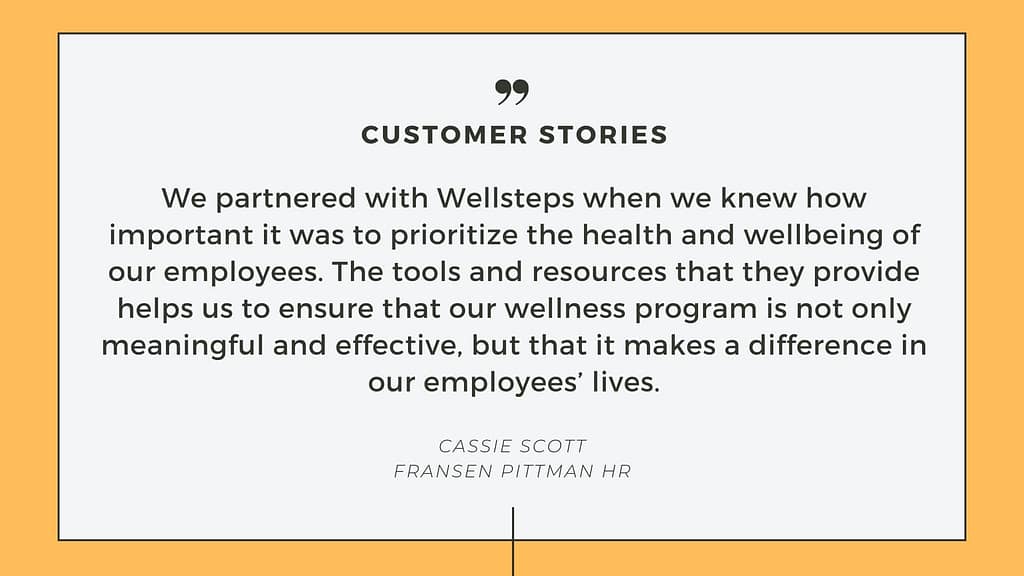
Why Does Choosing the Right Wellness Partner Matter?
Not all wellness solutions deliver real and lasting value. Some impress in demos but lack engagement; others add administrative burdens. The strongest partners deliver outcomes, not just features. That’s why choosing the right employee wellness vendor partnerships makes all the difference.
Brokers should look for:
— Proven engagement strategies
— Behavioral science-based programming
— Clear, actionable reporting
— Strong onboarding and support
— Scalable solutions that grow with the client
— A balance of technology and human coaching
At WellSteps, wellness is approached as an ongoing partnership, not just a one-time rollout. The platform combines behavior-change science, personalized guidance, and hands-on support to help organizations drive real, sustained engagement.
Who Truly Stands Out?
The brokers who win are those who solve bigger problems. These brokers stand out today because they aren’t just managing plans. They’re helping organizations answer bigger questions:
— How can employers reduce long-term risk?
— What are some strategies to keep our best people?
— How do we build a culture that actually supports performance?
Adding wellness to your portfolio expands your services and elevates your role. Employers are investing in workforce health, stability, and performance. Brokers who embrace this shift become indispensable.
Frequently Asked Questions
Employee wellness helps brokers differentiate by moving the conversation from pricing to business results. It gives brokers a clear way to show value through better engagement, lower health risks, stronger retention, and improved productivity. It also helps them build longer-term client relationships by making wellness an ongoing strategic service rather than a one-time renewal add-on.
Plan quoting alone makes brokers look interchangeable because many competitors can offer similar rates and designs. Wellness adds a more strategic layer by connecting benefits to workforce health, culture, and performance. That makes the broker’s role harder to replace and more valuable to employers.
Employers want solutions that reduce preventable health risks, support mental and physical well-being, and improve business performance. They also care about retention, productivity, and long-term cost control. A strong wellness offering gives them a clearer path to those results.
Wellness keeps brokers engaged throughout the year, not just during renewal season. That creates more touchpoints, more trust, and more chances to show value. Over time, the broker becomes a strategic partner rather than a vendor.

Visit our growing library of wellness articles packed with data-backed strategies, practical insights, and real-world guidance. Every article is designed to help you offer a wellness program that actually works. Not just one that looks good on paper, but one that drives engagement, changes behavior, and delivers measurable results. See how the WellSteps platform makes employee wellness simple, measurable, and effective. Schedule your demo today!